Introduction
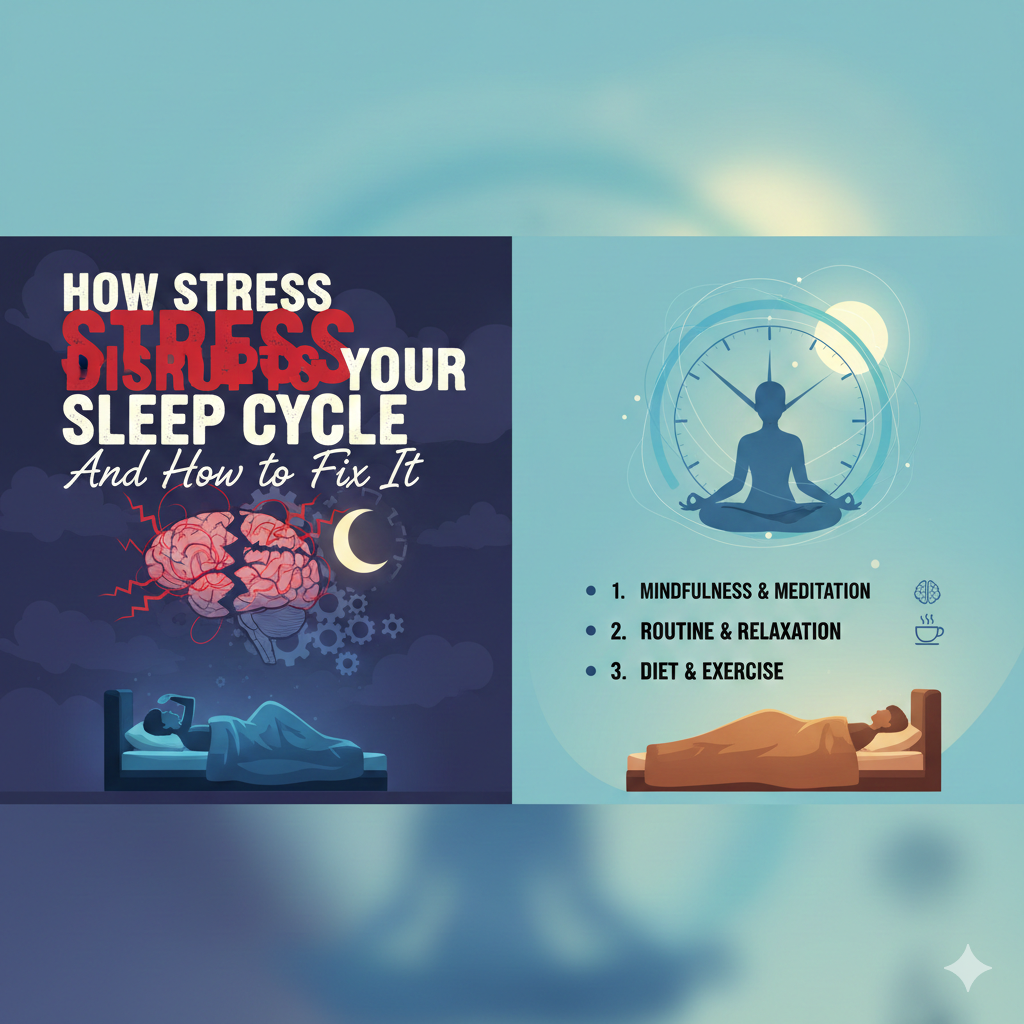
How stress disrupts sleep cycle by keeping stress hormones active at night, preventing deep and restorative sleep stages. Even if you sleep for hours, chronic stress can block proper recovery.
Many people blame caffeine, screens, or bedtime habits for poor sleep, yet overlook the biggest disruptor: unresolved stress. You may fall asleep quickly but wake up repeatedly, feel wired at night, or wake exhausted despite “enough” sleep. This isn’t a discipline issue—it’s a nervous system issue. This article explains how stress interferes with your sleep cycle at a biological and behavioral level, what most guides fail to explain, and how to fix the problem realistically without extreme routines.
Understanding the Sleep Cycle Stress disrupts sleep cycle How Stress Disrupts
Your sleep cycle moves through light sleep → deep sleep → REM sleep multiple times per night.
Each stage has a role:
- Light sleep: Transition and recovery setup
- Deep sleep: Physical repair and immune support
- REM sleep: Emotional processing and memory
When stress is high, your body struggles to stay in deep and REM sleep long enough.SERP Gap Insight: Most articles list sleep stages but don’t explain why stress selectively disrupts deep and REM sleep—the most restorative phases.
What Stress Does to Your Body at Night
Stress doesn’t stop just because you lie down.
Stress Triggers These Nighttime Effects:
- Elevated cortisol levels
- Increased heart rate
- Heightened alertness
- Shallow breathing
Your body remains in threat-detection mode, even while asleep.
[Expert Warning]
A stressed nervous system treats nighttime silence as a signal to process unresolved issues—not to rest.
The 3 Ways Stress Disrupts Your Sleep Cycle
1 Stress Shortens Deep Sleep
Deep sleep is the first stage sacrificed when stress is high.
Signs:
- Waking unrefreshed
- Muscle tension in the morning
- Frequent night awakenings
2 Stress Interferes With REM Sleep
REM sleep processes emotions.
When stress is unresolved:
- REM sleep becomes fragmented
- Dreams become vivid or disturbing
- Emotional fatigue increases
Information Gain:
Many SERPs mention REM sleep but don’t connect it to emotional stress processing. This explains why stressed people feel emotionally drained even after long sleep.
3 Stress Increases Micro-Awakenings
You may wake briefly dozens of times without remembering it.
Each micro-awakening resets the sleep cycle, reducing recovery.
Beginner Mistake Most People Make
Mistake: Trying to “Relax Harder” at Bedtime
People respond to stress-disrupted sleep by:
- Forcing relaxation
- Adding supplements
- Over-optimizing bedtime routines
Why it fails:
Stress needs downregulation, not control.
How to Fix Stress-Disrupted Sleep
Step 1: Reduce Stress Earlier in the Day
Nighttime sleep quality depends on daytime stress load.
Helpful habits:
- Short mental breaks
- Boundary setting
- Emotional expression
[Pro-Tip]
Stress processed during the day doesn’t need to surface at night.
Step 2: Create a Transition Phase Before Bed
Your nervous system needs a buffer zone.
Examples:
- 20–30 minutes of low stimulation
- No problem-solving late at night
- Gentle, predictable activities
Step 3: Regulate the Nervous System
Effective stress reduction is physiological, not just mental.
| Method | Effect on Sleep |
| Slow breathing | Lowers heart rate |
| Gentle stretching | Releases tension |
| Warm shower | Signals safety |
| Stillness | Calms alertness |
Information Gain: Why Sleep Hygiene Isn’t Enough
Sleep hygiene focuses on the environment.
Stress lives in the nervous system.
You can have:
- Perfect darkness
- Ideal temperature
- No screens
…and still sleep poorly if stress remains unresolved.
This explains why many people “do everything right” yet still wake exhausted.
Real-World Scenario: High Stress, Light Sleep
Scenario:
Someone under work pressure sleeps 7 hours but wakes up drained.
What’s happening:
- Cortisol remains elevated
- Deep sleep is shortened
- REM sleep is fragmented
Effective Fixes:
- Daytime stress release
- Earlier mental shutdown
- Consistent wake time
From practical experience, reducing daytime stress load improves sleep depth faster than any nighttime hack.
How Stress, Sleep, and Mental Fitness Connect
Chronic stress affects:
- Sleep quality
- Emotional regulation
- Cognitive performance
Improving sleep cycle stability strengthens mental fitness, not just rest.
Internal Links :
- “natural ways to improve sleep quality” → How to Improve Sleep Quality Naturally
- “sleep anxiety and nighttime stress” → Sleep Anxiety: Causes and Practical Solutions
Table: Stress Impact vs Sleep Effects
| Stress Pattern | Sleep Impact |
| Chronic worry | Shallow sleep |
| Emotional suppression | REM disruption |
| Overworking | Reduced deep sleep |
| Late stimulation | Fragmented cycles |
FAQs
Q1. How does stress disrupt the sleep cycle?
Stress keeps the nervous system alert, reducing deep and REM sleep.
Q2. Can stress cause frequent night awakenings?
Yes. Stress increases micro-awakenings.
Q3. Why do stressed people wake up tired?
Because recovery stages are shortened.
Q4. Does managing stress improve sleep quality?
Yes—often more than sleep hacks.
Q5. How long does it take to fix stress-related sleep issues?
Most people notice improvement within 2–4 weeks.
Conclusion:
If stress disrupts your sleep cycle, sleep problems won’t resolve at bedtime alone. Recovery improves when stress is reduced, processed, and regulated throughout the day. Calm the nervous system first—sleep will follow naturally.
Internal link:
Signs of Poor Sleep Quality: How to Tell If Your Sleep Isn’t Restoring You 2026
External link:
https://www.sleepfoundation.org/best-mattress-protectors/best-mattress-encasements