Introduction
Wearable health tech pros and cons offers real benefits—like activity awareness and habit feedback—but also real downsides, including data anxiety and false reassurance. The impact depends on how you use the data, not the device itself.
Smartwatches and fitness trackers promise insight into sleep, heart rate, steps, stress, and recovery. For some people, these tools create motivation and clarity. For others, they increase pressure, confusion, or obsession. The difference isn’t willpower—it’s expectation and interpretation. This article breaks down the true pros and cons of wearable health tech, explains where these devices help (and where they mislead), and shows how to use them as tools—not judges—of your health.
What Counts as Wearable Health Tech? Wearable health tech pros and cons
Wearable health tech includes devices that track biological or behavioral signals, such as:
Smartwatches
Fitness trackers
Sleep trackers
Heart-rate monitors
They estimate—not diagnose—health metrics.
SERP Gap Insight:
Many articles blur the line between tracking and medical measurement, leading to unrealistic expectations.
The Real Benefits of Wearable Health Tech
Increased Awareness of Daily Movement
Wearables are excellent at showing:
How much you move
How sedentary you are
Patterns across days
For beginners, this awareness alone often improves activity levels.
Habit Formation Through Feedback
Seeing patterns helps people:
Walk more
Maintain routines
Build consistency
Feedback loops are powerful when expectations stay realistic.
[Pro-Tip]
Wearables work best as mirrors, not scorecards.
Early Pattern Detection (Not Diagnosis)
Wearables can highlight:
Sleep inconsistency
Activity drops
Elevated resting heart rate
These patterns can prompt healthier decisions—but should not replace medical advice.
Motivation for Some Personalities
People who enjoy data often feel:
More engaged
More consistent
More accountable
For them, wearables can support long-term habits.
The Often-Ignored Downsides of Wearables
Data Anxiety and Overinterpretation
Common issues include:
Stress over “bad” sleep scores
Obsessive checking
Fear triggered by normal variation
Information Gain:
Most SERPs praise data access but rarely address how imperfect data increases anxiety, especially for sensitive users.
False Precision and Misleading Metrics
Wearables estimate sleep stages, stress, and recovery.
Limitations:
Algorithms vary
Wrist sensors aren’t medical-grade
Results differ between brand
[Expert Warning]
Treat wearable data as directional, not definitive.
Behavior Distortion
People may:
Walk extra steps just to hit numbers
Panic after one bad night
Ignore how they actually feel
This can reduce body awareness instead of improving it.
Dependence on External Validation
Some users stop trusting:
Energy levels
Mood
Fatigue signals
unless the device confirms it.
This disconnect can harm long-term self-regulation.
Beginner Mistake Most People Make
Mistake: Letting the Device Define Health
People assume:
Green scores = healthy
Red scores = failure
Fix:
Use data as context, not judgment.
[Pro-Tip]
If you feel good but the device says “poor,” trust your body first.
Information Gain: Who Benefits—and Who Should Be Careful
Wearables Help Most If You:
Like data without emotional attachment
Use trends, not daily scores
Combine data with body awareness
Wearables Can Harm If You:
Have health anxiety
Obsess over numbers
Need external validation
This nuance is rarely explained in top search results.
How to Use Wearable Health Tech Safely
Step 1: Check Trends, Not Days
Weekly or monthly patterns matter more than daily scores.
Step 2: Pair Data With Reflection
Ask, “Does this match how I feel?”
Step 3: Take Regular Breaks
Occasional device-free weeks reset perspective.
Step 4: Avoid Medical Conclusions
Use data as conversation starters—not diagnoses.
Real-World Scenario: “My Watch Says I Slept Poorly—But I Feel Fine”
Scenario:
A device shows low sleep score, but the person feels rested.
Better response:
Note the data
Trust subjective recovery
Look at trends, not one night
From practical experience, ignoring single-night scores reduces anxiety and improves sleep confidence.
How Wearables Fit Into Digital Wellness
Used intentionally, wearables can:
Support awareness
Encourage movement
Highlight patterns
Used poorly, they can:
Increase stress
Reduce intuition
Create dependence
Internal Links (Contextual):
“digital wellness and intentional tech use” → Digital Wellness: How Technology Is Affecting Your Health
“technology effects on sleep” → How Technology Affects Sleep Quality
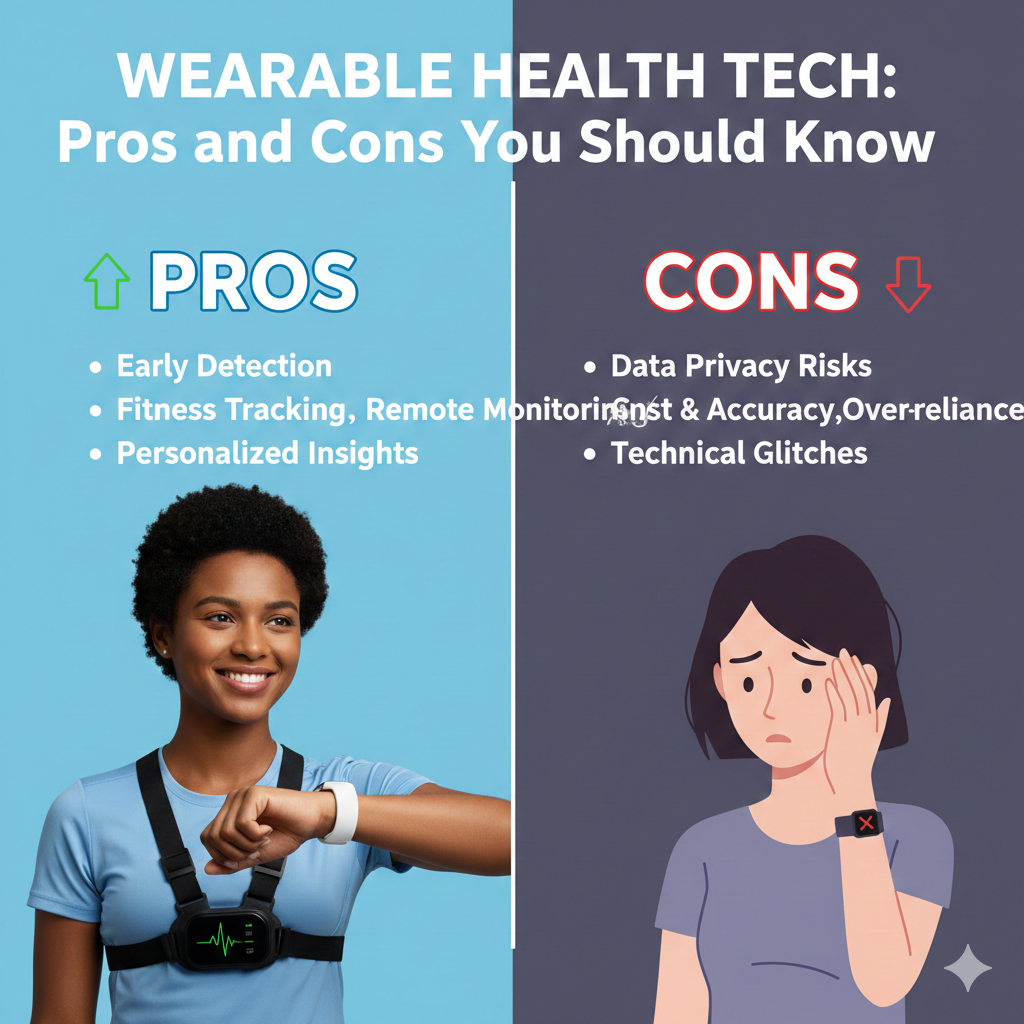
Table: Wearable Health Tech — Pros vs Cons
| Pros | Cons |
| Increases awareness | Can increase anxiety |
| Encourages movement | Data can mislead |
| Tracks patterns | False precision |
| Motivates some users | Dependence risk |
FAQs
Q1. Are wearable health devices accurate?
They provide estimates, not medical measurements.
Q2. Can wearables increase anxiety?
Yes, especially when users overinterpret data.
Q3. Should everyone use a fitness tracker?
No. Personality and mindset matter.
Q4. How often should I check wearable data?
Weekly trends are better than daily checks.
Q5. Can wearables replace medical tests?
No. They’re not diagnostic tools.
Conclusion:
Wearable health tech can be helpful—or harmful—depending on how it’s used. When data supports awareness without control, wearables add value. When numbers override intuition, they take it away. Use the tool, keep the wisdom.
Internal link:
How Technology Affects Sleep Quality (Beyond Blue Light)
External link:
https://apastyle.apa.org/?utm_source=apa.org&utm_medium=referral&utm_content=/monitor/2019/01/tech-mental-health