
Introduction
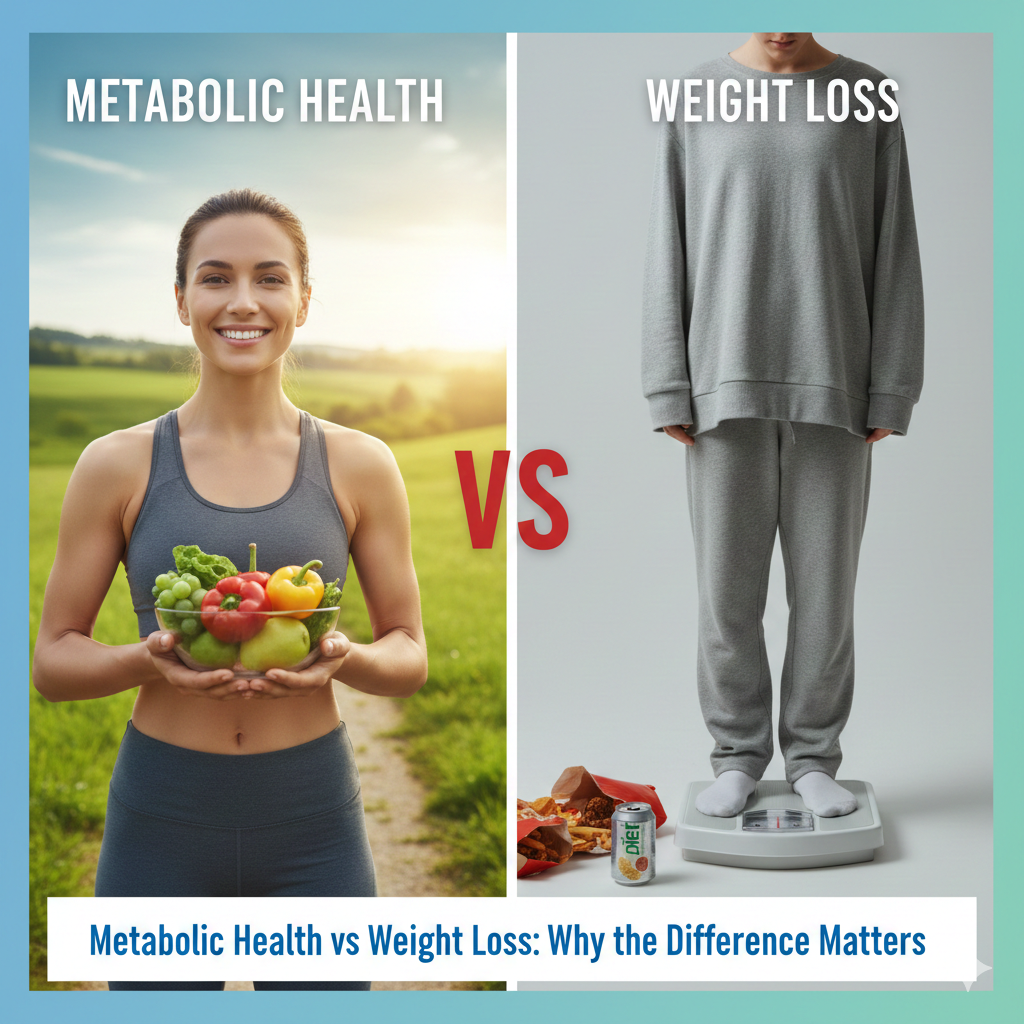
Metabolic health vs weight loss are not the same: weight loss reflects a change on the scale, while metabolic health reflects how efficiently your body manages energy, blood sugar, hormones, and recovery. Focusing only on weight can undermine long-term health.
For years, health advice has treated weight loss as the ultimate marker of success. If the number goes down, things must be improving—right? In reality, many people lose weight while feeling worse: more tired, colder, hungrier, and mentally drained. Others maintain or even gain weight while their energy, labs, and resilience improve. This disconnect exists because metabolic health and weight loss measure different things. Understanding the difference changes how you eat, train, and recover—and prevents cycles of burnout and regain.
What Is Metabolic Health (In Practical Terms)? Metabolic health vs weight loss
Metabolic health describes how well your body:
- Uses and stores energy
- Regulates blood sugar
- Responds to stress
- Recovers from activity
- Maintains hormonal balance
It’s reflected in:
- Stable energy
- Predictable hunger
- Good sleep and recovery
- Flexibility with food
SERP Gap Insight:
Many articles reduce metabolic health to lab numbers alone. Few explain how it feels day to day—and why that matters for sustainability.
What Weight Loss Measures
Weight loss measures mass change, not health.
The scale cannot tell you:
- Whether muscle was lost
- Whether stress hormones rose
- Whether energy availability dropped
- Whether recovery improved
Why the Scale Misleads
Weight can drop due to:
- Water loss
- Muscle loss
- Chronic under-fueling
All three can worsen metabolic health.
[Expert Warning]
Rapid weight loss often comes from metabolic stress, not metabolic improvement.
How Weight Loss Can Harm Metabolic Health
Weight loss becomes harmful when it’s driven by:
- Severe calorie restriction
- Excessive cardio
- Poor sleep
- High stress
Common Consequences
- Reduced resting energy expenditure
- Increased fatigue and irritability
- Poor exercise recovery
- Weight regain risk
Information Gain:
Top SERPs often celebrate short-term weight loss while ignoring the metabolic cost paid later.
Metabolic Health Can Improve Without Weight Loss
This is the part many people miss.
You can improve metabolic health by:
- Eating more consistently
- Reducing stress
- Improving sleep
- Building muscle
Even if weight stays the same, people often notice:
- Better energy
- Clearer thinking
- More stable appetite
- Improved training capacity
From real-world experience, these improvements often precede healthy weight changes—not the other way around.
Beginner Mistake Most People Make
Mistake: Using Weight Loss as the Only Feedback Signal
People adjust food and exercise based solely on the scale.
Problem:
The scale reacts slowly and noisily.
Fix:
Track functional signals instead:
- Morning energy
- Hunger consistency
- Recovery speed
- Mood stability
[Pro-Tip]
If energy and recovery improve, metabolic health is improving—even if the scale hasn’t moved yet.
Information Gain: Why “Calories In, Calories Out” Is Incomplete
Energy balance matters—but it’s not static.
Calories out depends on:
- Muscle mass
- Stress hormones
- Sleep quality
- Past restriction
When metabolic health declines, your body conserves energy—making weight loss harder and less sustainable.
This nuance is often missing from simplified advice.
A Better Framework: Health-First, Weight-Optional
The Health-First Progress Model
| Priority | What to Watch |
| Energy | Stable, predictable |
| Hunger | Normal, not extreme |
| Sleep | Consistent, restorative |
| Recovery | Faster bounce-back |
| Strength | Gradual improvement |
Weight becomes an outcome, not a command.
Real-World Scenario: “I Lost Weight but Feel Worse”
Scenario:
Someone loses weight quickly but feels exhausted, cold, and irritable.
What happened:
- Under-fueling
- Stress overload
- Muscle loss
Health-first correction:
- Increase food slightly
- Reduce training intensity
- Improve sleep
Within weeks, energy and mood improve—often before weight stabilizes or changes again.
When Weight Loss and Metabolic Health Align
Weight loss tends to be healthier when:
- Eating is consistent
- Protein intake is adequate
- Strength training is present
- Stress is managed
In these cases, weight loss reflects metabolic support, not stress.
How This Fits Into a Sustainable Metabolism Plan
Prioritizing metabolic health supports:
- Long-term weight stability
- Better food flexibility
- Improved resilience to stress
- Lower rebound risk
Internal Links (Contextual):
- “how to improve metabolism naturally” → How to Improve Metabolism Naturally
- “signs your metabolism may be slow” → Signs of a Slow Metabolism
Table: Weight Loss Focus vs Metabolic Health Focus
| Weight Loss Focus | Metabolic Health Focus |
| Scale changes | Energy consistency |
| Rapid results | Sustainable progress |
| Restriction | Adequate fueling |
| Short-term | Long-term |
| High rebound risk | Lower rebound risk |
FAQs
Q1. Is metabolic health more important than weight loss?
Yes. Metabolic health supports long-term outcomes.
Q2. Can I be metabolically healthy without losing weight?
Yes. Many improvements occur before weight changes.
Q3. Does weight loss always improve health?
No. Rapid or forced loss can worsen metabolic health.
Q4. How do I measure metabolic health without labs?
Energy, recovery, sleep, and hunger patterns.
Q5. Will focusing on health prevent weight loss?
Often the opposite—it makes weight change more sustainable.
Conclusion:
Weight loss is a number. Metabolic health is a system. When you prioritize how your body functions—energy, recovery, resilience—weight outcomes become more stable and sustainable. Build health first, and let weight follow naturally.
Internal link:
Signs of a Slow Metabolism: Real Symptoms vs Common Myths 2026
External link:
https://my.clevelandclinic.org/florida


