Introduction
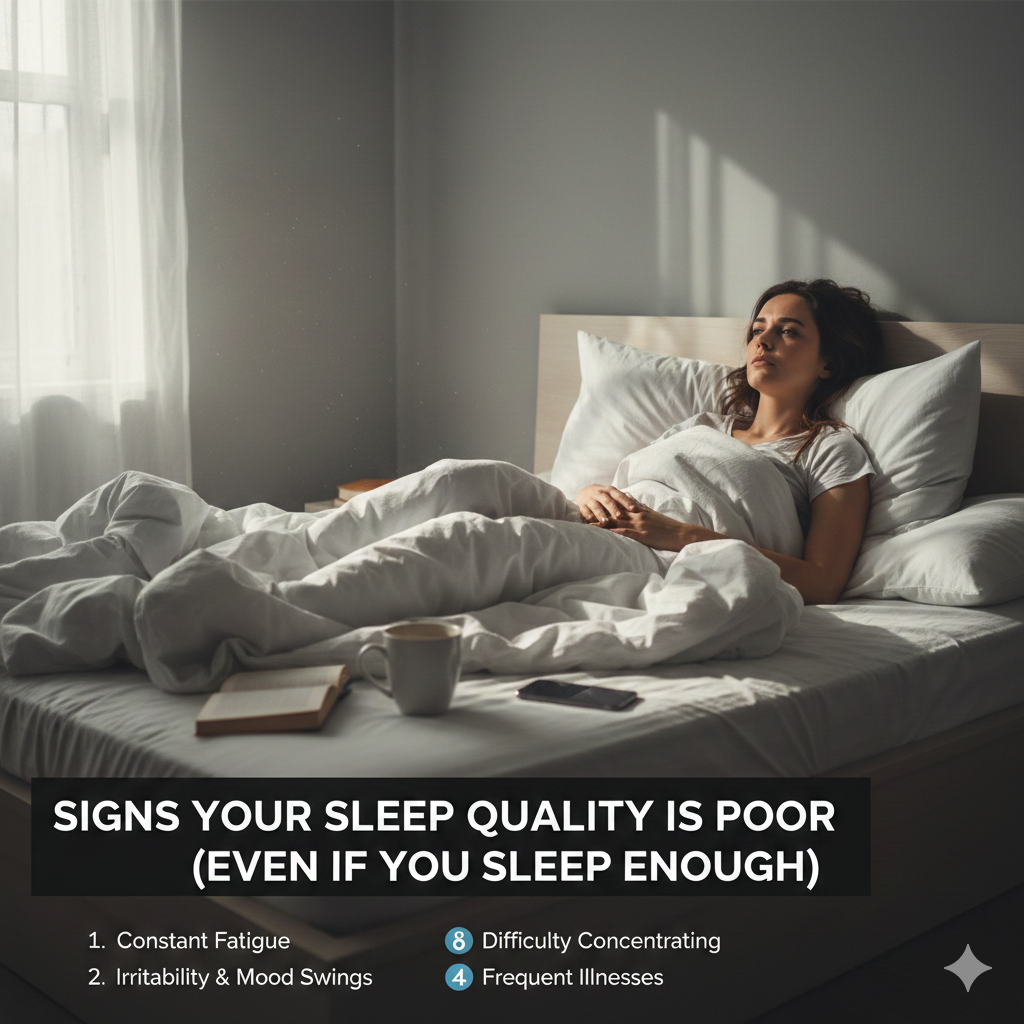
These signs of poor sleep quality often go unnoticed because people assume long sleep equals good rest. Signs of poor sleep quality include waking up tired, brain fog, low mood, frequent night awakenings, and needing caffeine to function—even after enough sleep. These signals point to weak recovery, not short sleep.
Many people assume that if they’re sleeping seven or eight hours, sleep can’t be the problem. Yet they wake up heavy, unfocused, or emotionally flat, and push through the day with caffeine. This disconnect happens because sleep duration and sleep quality are not the same thing. Poor sleep quality hides in plain sight, showing up as daytime symptoms rather than nighttime complaints. This article helps you recognize the subtle and overlooked signs of poor sleep quality, explains why they happen, and shows how to correct them realistically.
Why Poor Sleep Quality Often Goes Unnoticed
Poor sleep quality is sneaky because it doesn’t always stop you from sleeping.
You may:
- Fall asleep easily
- Stay in bed for hours
- Wake up “on time”
Yet still feel unrefreshed.
SERP Gap Insight:
Most top results list insomnia symptoms. Very few explain how people with poor sleep quality often don’t think they have a sleep problem at all.
The Difference Between “Sleeping” and “Recovering”
Sleeping = time unconscious
Recovering = physical + mental restoration
When recovery is weak:
- Muscles don’t fully repair
- The brain doesn’t process emotions
- Stress hormones stay elevated
This creates daytime symptoms that feel unrelated to sleep—but aren’t.
The Most Common Signs of Poor Sleep Quality
1 You Wake Up Tired or Heavy
This is the clearest signal.
If you regularly wake up feeling:
- Groggy
- Heavy
- Already exhausted
your deep sleep is likely shortened or fragmented.
2 Brain Fog and Poor Focus During the Day
Poor sleep quality affects cognitive clarity more than sleep duration.
You may notice:
- Slower thinking
- Forgetfulness
- Difficulty concentrating
Information Gain:
Most SERP articles focus on fatigue but overlook cognitive fog as a primary sign of poor sleep recovery.
3 You Rely on Caffeine to Feel Normal
Needing caffeine isn’t the issue—needing it just to function is.
If you feel:
- Nonfunctional before caffeine
- Irritable without it
- More tired when it wears off
your sleep isn’t restoring energy properly.
4 Mood Swings or Low Emotional Resilience
Poor sleep quality reduces emotional regulation.
Common signs:
- Irritability
- Low frustration tolerance
- Emotional flatness
This happens when REM sleep (emotional processing) is disrupted.
5 Frequent Night Awakenings
You may not recall waking—but your body does.
Clues include:
- Tossing and turning
- Light sleep
- Waking suddenly
Each micro-awakening weakens recovery.
6 You Feel Worse as the Day Goes On
With good sleep quality, energy stabilizes or improves.
With poor sleep quality:
- Energy declines steadily
- Stress feels heavier
- Motivation drops
This pattern often gets misattributed to “burnout” alone.
Myth vs Reality: Common Sleep Misconceptions
Myth: “If I sleep long enough, I’m fine”
Reality: Quality matters more than hours.
Myth: “I don’t have insomnia, so my sleep is fine”
Reality: Poor sleep quality can exist without insomnia.
Myth: “Daytime fatigue is just stress”
Reality: Stress and poor sleep quality often reinforce each other.
Beginner Mistake Most People Make
Mistake: Ignoring Daytime Symptoms
People often chase sleep fixes only when nights feel bad.
Fix:
Use daytime signals as your primary sleep quality indicators.
[Expert Warning]
Treating poor sleep quality as a motivation or productivity issue delays real recovery.
Information Gain: Why Wearables Often Miss Poor Sleep Quality
Sleep trackers focus on:
- Duration
- Basic stages
- Movement
They often miss:
- Emotional recovery
- Nervous system stress
- Cognitive restoration
From real usage, people with “good sleep scores” still feel exhausted because data can’t fully capture recovery quality.
Use trackers as reference—not truth.
How to Improve Sleep Quality Once You Spot the Signs
Step 1: Stabilize Your Wake Time
Consistency improves sleep efficiency.
Step 2: Reduce Daytime Stress Load
Unprocessed stress resurfaces at night.
Step 3: Create a Mental Wind-Down
Your brain needs closure, not silence.
[Pro-Tip]
Fixing sleep quality often starts with changing how your day ends, not how your night begins.
Real-World Scenario: “I Sleep, But I’m Always Foggy”
Scenario:
Someone sleeps 7–8 hours but struggles with focus and mood.
Hidden causes:
-
- Fragmented sleep
- High stress
- No mental decompression
Effective adjustments:
- Earlier wind-down
- Reduced evening stimulation
- Consistent wake time
From practical experience, addressing mental recovery improves clarity faster than sleeping longer.
How Poor Sleep Quality Connects to Other Issues
Persistent poor sleep quality contributes to:
- Chronic fatigue
- Anxiety
- Reduced mental fitness
Improving sleep quality often improves multiple areas at once.
Internal Links
- “natural ways to improve sleep quality” → How to Improve Sleep Quality Naturally
- “how stress disrupts recovery” → How Stress Disrupts Your Sleep Cycle.
Table: Signs of Poor Sleep Quality & What They Mean
| Symptom | Likely Cause |
| Morning fatigue | Shortened deep sleep |
| Brain fog | Poor recovery |
| Mood swings | REM disruption |
| Caffeine dependence | Energy debt |
| Night awakenings | Stress activation |
FAQs
Q1. What are the most common signs of poor sleep quality?
Morning fatigue, brain fog, low mood, and reliance on caffeine.
Q2. Can you have poor sleep quality without insomnia?
Yes. Many people sleep long hours but recover poorly.
Q3. How do I know if my sleep quality is improving?
Better morning energy and clearer focus.
Q4. Do sleep trackers accurately measure sleep quality?
They provide hints, not full answers.
Q5. How long does it take to fix poor sleep quality?
Most people notice improvement within 2–4 weeks.
Conclusion:
Poor sleep quality reveals itself through your days, not just your nights, affecting energy, focus, and emotional balance. When you learn to recognize these signs early, recovery becomes easier and more effective. Focus on restoring depth, not chasing hours—and let sleep work the way it’s meant to.
Internal link:
How Stress Disrupts the Sleep Cycle (And Why You Wake Up Unrested) 2026
External link:
https://www.sleepfoundation.org/how-sleep-works/what-is-sleep-quality