
Introduction
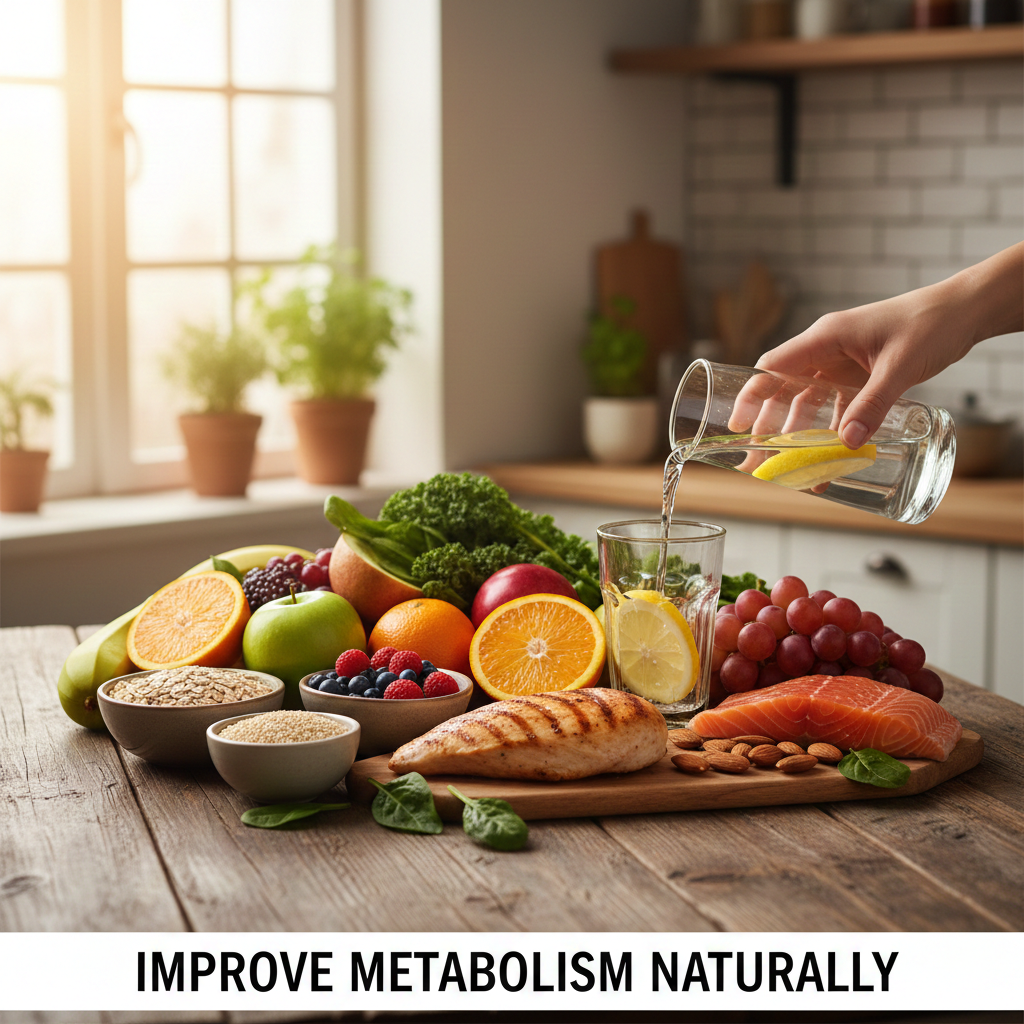
These habits are the safest way to improve metabolism naturally without stressing the body or triggering metabolic slowdown. To improve metabolism naturally, focus on daily habits that support energy balance—consistent meals, regular movement, quality sleep, and stress control—rather than extreme diets or supplements. Metabolism responds best to stability, not shock.
Metabolism is often treated like a switch you can flip with a diet or a pill. In reality, it’s a dynamic system that adapts to how you eat, move, sleep, and handle stress over time. Many people feel sluggish, gain weight easily, or struggle with low energy and assume their metabolism is “broken.” What’s usually happening is adaptation—not failure. This guide explains how metabolism actually works, why quick fixes backfire, and how to support metabolic health naturally with realistic, sustainable choices.
What Metabolism Really Is (Beyond Weight Loss)
Metabolism isn’t just about burning calories. It includes:
- How efficiently you convert food into energy
- How your body regulates blood sugar
- How hormones respond to stress and sleep
- How cells repair and renew
SERP Gap Insight:
Top results focus heavily on fat loss. Few explain metabolism as a whole-body energy system. That narrow framing leads to poor advice.
Why “Boosting” Metabolism Is the Wrong Goal
Your metabolism adapts to protect you.
When you:
- Severely restrict calories
- Skip meals often
- Overtrain without recovery
your body slows energy use to survive.
[Expert Warning]
Aggressive calorie cutting often lowers metabolic rate over time—even if weight drops initially.
Better goal:
Create conditions where your metabolism feels safe to function efficiently.
The 5 Natural Levers to Improve Metabolism Naturally
Eat Enough (Yes, Enough)
Chronic under-eating is one of the fastest ways to slow metabolism.
Signs you may be under-fueling:
- Constant fatigue
- Cold sensitivity
- Intense cravings
- Irritability
Information Gain:
Many SERP articles push “eat less, move more” without explaining that consistent under-fueling reduces metabolic output.
Prioritize Protein at Regular Meals
Protein supports:
- Muscle maintenance
- Thermic effect of food
- Blood sugar stability
You don’t need extremes—just consistency.
| Meal | Simple Protein Options |
| Breakfast | Eggs, yogurt, lentils |
| Lunch | Chicken, tofu, beans |
| Dinner | Fish, paneer, legumes |
[Pro-Tip]
Aim for protein at every meal, not massive amounts at one.
Build Muscle With Gentle Consistency
Muscle tissue uses more energy than fat tissue—even at rest.
You don’t need heavy gym sessions.
- Bodyweight exercises
- Resistance bands
- Light weights
3–4 short sessions per week are enough to support metabolism.
Sleep: The Most Ignored Metabolic Tool
Poor sleep disrupts:
- Insulin sensitivity
- Hunger hormones
- Energy regulation
From real-world observation, improving sleep often improves metabolism without changing diet.
Reduce Chronic Stress
Stress hormones signal energy conservation.
Chronic stress can:
- Increase fat storage
- Reduce energy output
- Disrupt digestion
Information Gain:
Most metabolism guides ignore stress, yet stress management often improves metabolic markers faster than diet changes alone.
Beginner Mistake Most People Make
Mistake: Chasing Metabolic “Boosts”
People look for:
- Fat-burning foods
- Metabolism teas
- Short challenges
Fix:
Focus on metabolic stability, not stimulation.
Metabolism improves when your body trusts consistency.
A Practical, Natural Metabolism-Support Framework
The 4-Pillar Model
| Pillar | Focus | Why It Matters |
| Fuel | Enough, regular meals | Prevents slowdown |
| Muscle | Light resistance | Raises baseline use |
| Rest | Sleep & recovery | Regulates hormones |
| Calm | Stress control | Prevents conservation |
This framework avoids extremes and supports long-term energy.
Myth vs Reality: Metabolism Edition
Myth: “My metabolism is slow, so nothing works.”
Reality: Metabolism adapts—and can readapt.
Myth: “Eating less speeds fat loss.”
Reality: Severe restriction often backfires.
Myth: “Only intense exercise helps.”
Reality: Consistent, moderate movement works better.
Real-World Scenario: “I Eat Very Little but Still Feel Sluggish”</stron
Scenario:
Someone eats very little, exercises often, yet feels tired and stuck.
What’s happening:
- Under-fueling
- Stress overload
- Poor recovery
Natural Fixes:
- Slightly increase food intake
- Reduce intensity
- Improve sleep
From practical experience, eating more strategically often improves energy and metabolism within weeks.
How Nutrition Choices Support Metabolism (Without Dieting)
Instead of cutting foods, add stability:
- Eat at similar times daily
- Combine protein + carbs
- Avoid long fasts unless medically guided
This steadiness helps hormones recalibrate.
Internal Links:
- “best foods for metabolic health” → Best Foods for Metabolic Health
- “signs your metabolism may be slow” → Signs of a Slow Metabolism
Table: Natural Metabolism Support vs Common Mistakes
| Helpful Habit | Common Mistake |
| Regular meals | Skipping meals |
| Protein at meals | Low protein diets |
| Strength training | Excessive cardio |
| Stress reduction | Constant hustle |
| Adequate sleep | Late nights |
FAQs
Q1. How can I improve my metabolism naturally?
By eating enough, moving consistently, sleeping well, and managing stress—the core foundations to improve metabolism naturally.
Q2. Does skipping meals slow metabolism?
Yes, chronic skipping can reduce metabolic output.
Q3. Can stress affect metabolism?
Yes. Stress hormones promote energy conservation.
Q4. Is strength training necessary?
It helps, but moderate resistance is enough.
Q5. How long does it take to see improvement?
Most people notice changes in 2–4 weeks.
Conclusion:
Improving metabolism naturally isn’t about forcing change—it’s about choosing habits that help you improve metabolism naturally through consistency and balance. It’s about creating conditions where your body feels safe, fueled, and supported. When you prioritize consistency over extremes, metabolism adapts in your favor—quietly and sustainably.
Internal link:
Best Foods for Metabolic Health: What to Eat for Stable Energy and Hormone Balance 2026
External link:
https://www.health.harvard.edu/staying-healthy/the-truth-about-metabolism


